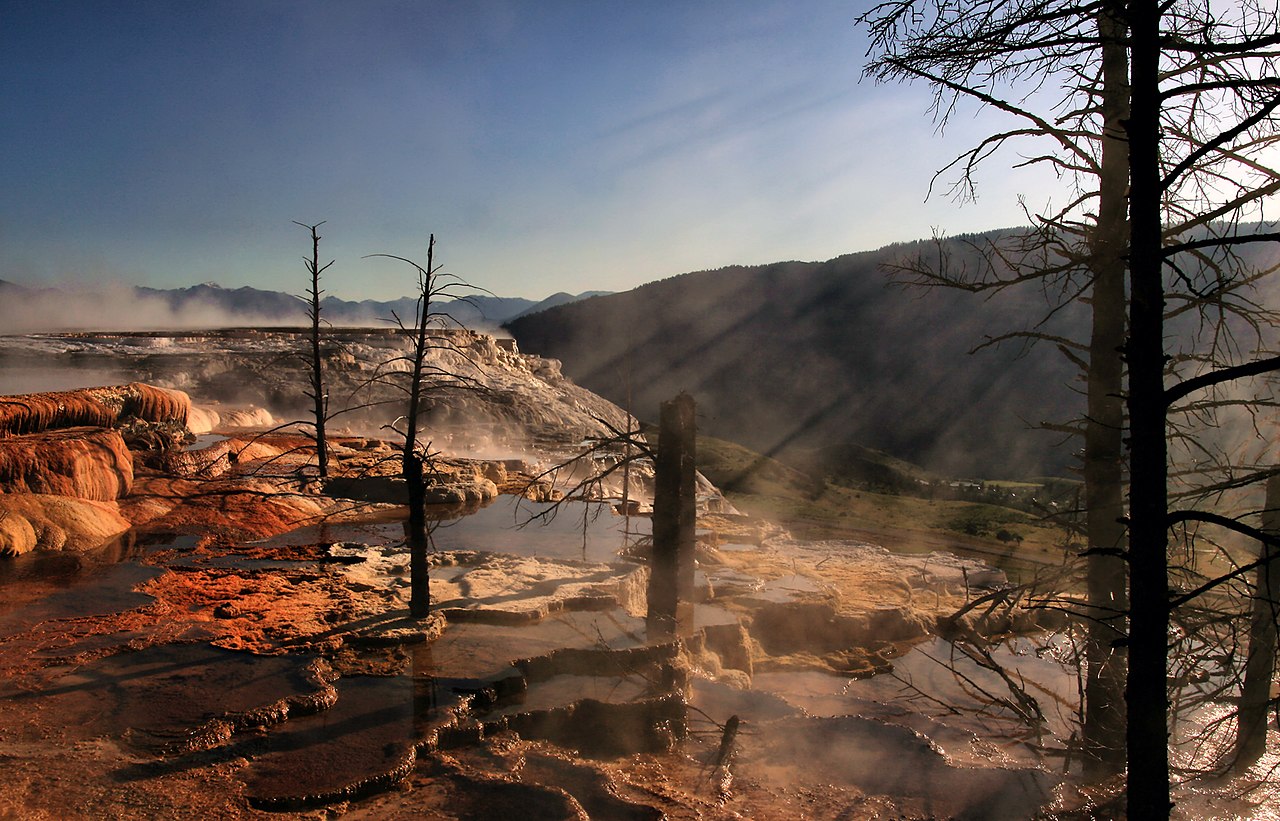
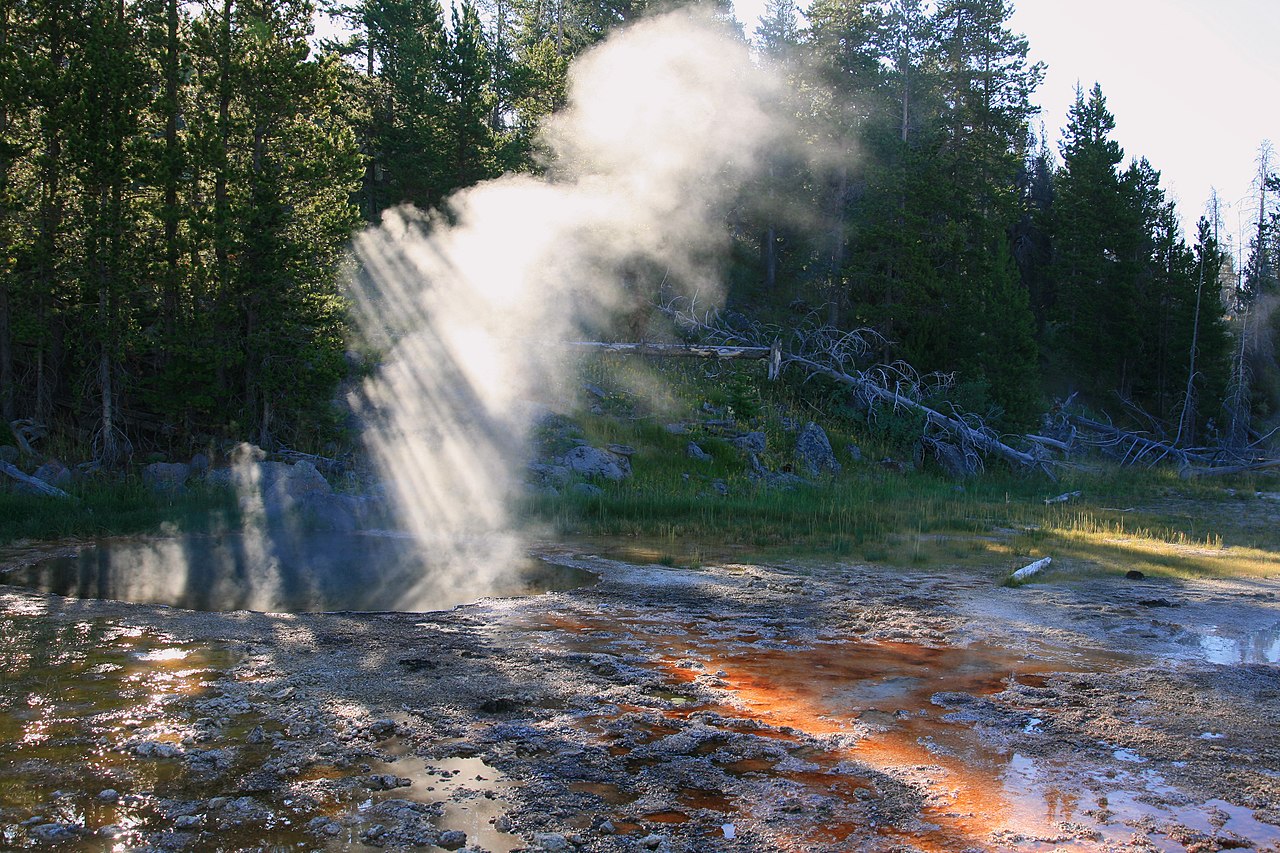
Yellowstone National Park sits atop one of the most powerful volcanic systems on Earth, a supervolcano caldera stretching roughly 45 by 30 miles across the high plateau of northwestern Wyoming. This immense magmatic hotspot has been reshaping the landscape for millions of years, and today it fuels more than half of all the world's geysers — roughly 500 of them — along with thousands of hot springs, fumaroles, and mud pots that hiss and bubble across the terrain. The caldera last experienced a catastrophic eruption some 640,000 years ago, and the heat still churning beneath the surface is what makes Yellowstone one of the most geologically alive places on the planet. Walking through the park is, in the most literal sense, walking on the thin skin of a restless Earth.
Explore Yellowstone
See Yellowstone in our curated photo essay.
Think you know Yellowstone? Take our 10-question quiz and find out.
The most iconic expression of all that underground energy is Old Faithful, a geyser that has been erupting roughly every 90 minutes for as long as records have been kept, shooting columns of boiling water and steam up to 185 feet into the air. But Old Faithful is just the most famous performer in a vast hydrothermal theater. The Grand Prismatic Spring, the park's largest hot spring, spans more than 300 feet across and blazes with concentric rings of electric blue, green, yellow, and orange — colors produced not by minerals but by heat-adapted microbial mats called thermophiles. Norris Geyser Basin holds some of the hottest and most acidic geothermal features on the continent. The Mammoth Hot Springs terraces, built layer by layer from dissolved travertine, resemble frozen waterfalls cascading down the hillside. Every corner of the park reveals another geological spectacle.
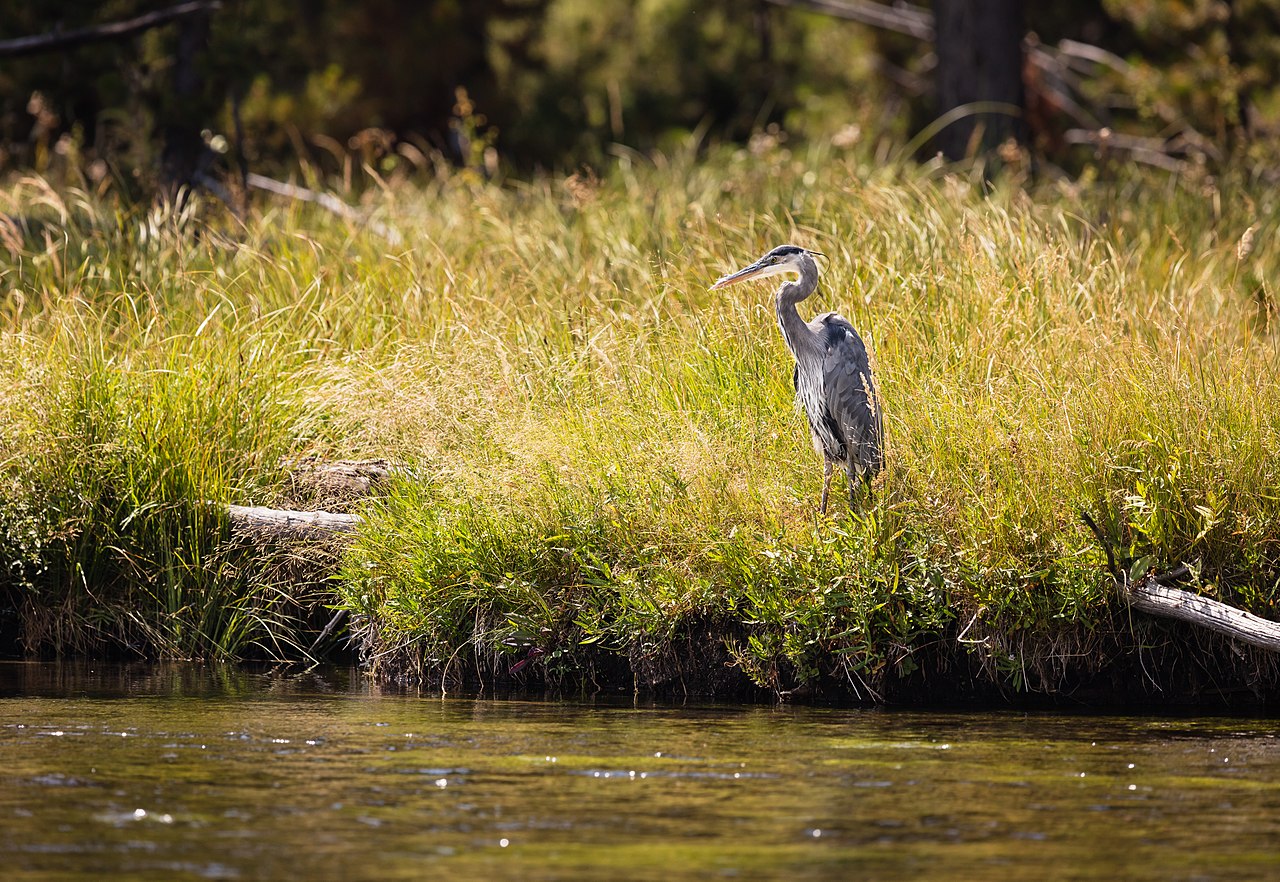
Yellowstone's wilderness extends far beyond its volcanic features, encompassing dense lodgepole pine forests, alpine meadows, the deep blue waters of Yellowstone Lake — one of the largest high-altitude lakes in North America — and the dramatic Grand Canyon of the Yellowstone, a 24-mile gorge whose golden and crimson walls drop nearly 1,000 feet to the roaring river below. The park supports one of the most intact temperate ecosystems anywhere in the world. Gray wolves, reintroduced in 1995 after a 70-year absence, have transformed the landscape through a cascade of ecological effects, pulling elk herds away from riverbanks and allowing willows and aspens to regenerate, which in turn restored songbird populations and stabilized stream banks for fish. Grizzly bears, bison, pronghorn, elk, moose, and bighorn sheep all roam freely here, often visible from roadside pullouts in numbers that would have seemed unimaginable in most of the modern world.
UNESCO inscribed Yellowstone as a World Heritage Site in 1978 — one of the first properties ever added to the list — recognizing it as an outstanding example of Earth's geological history and as a living laboratory for ecological processes that have been disrupted nearly everywhere else. The park also holds immense scientific value: the thermophiles discovered in Yellowstone's hot springs led directly to the development of PCR technology, the polymerase chain reaction technique that underpins modern DNA testing and medical diagnostics. Researchers continue to study the park's extremophile microorganisms, its wolf-prey dynamics, and its hydrothermal systems, making Yellowstone one of the most studied natural environments on Earth. Its protected status, combined with its role as the anchor of the larger Greater Yellowstone Ecosystem — one of the last nearly intact temperate ecosystems in the Northern Hemisphere — gives the site a conservation significance that extends across the entire mountain West.
Visitors arrive throughout the year, though summer brings the largest crowds along the park's famous figure-eight road loop, which connects the major hydrothermal basins, wildlife-rich valleys, and canyon overlooks. The best wildlife viewing happens at dawn and dusk in the Lamar Valley, often called the Serengeti of North America, where wolf packs and bison herds share the floodplain in full view of the road. Hikers willing to venture even a short distance from the pavement discover a quieter Yellowstone — backcountry thermal features, hidden waterfalls, and meadows carpeted with wildflowers. Winter transforms the park into a landscape of surreal beauty, with bison standing wreathed in steam from the geothermal vents, wolves tracking prey across the snow, and the roads replaced by groomed snowcoach and snowmobile routes. Whatever the season, Yellowstone rewards patience and attentiveness with encounters that feel genuinely wild — a reminder of what North America looked like before the age of settlement, preserved in amber by the very forces that make this ground so dangerous and so alive.